
300% ROAS in Under 6 Months for a Cloud Software Provider
- 01. ROAS
- 02. CAMPAIGNS
- 03. NEW USERS
300% ROAS in 6 Months on Microsoft Ads for a Cloud Software Provider
Built a Microsoft Ads system anchored on LinkedIn profile targeting, with brand and solution keyword campaigns layered around it.
The Problem
A cloud software provider was running Google Ads as the main acquisition channel. The product targets IT decision makers and enterprise buyers, which sits in one of the most expensive verticals on Google.
Year over year, CPC on Google was climbing 11.34%, the highest of any vertical. CAC kept moving in the wrong direction. The lead cost was high enough that the unit economics were getting squeezed every quarter.
The team didn’t have a real budget alternative to lean on. Google was the default, and the assumption was that Bing wasn’t worth the effort because of the volume gap.
The audience math told a different story. Microsoft’s professional desktop traffic during work hours is exactly where IT directors and enterprise decision makers sit. And Microsoft’s LinkedIn profile targeting could narrow that audience down to specific job titles and industries directly inside the ad platform.
The job was to shift core spend to Microsoft Ads and build a system that brought IT decision makers in at a lower CAC than Google was producing.
What I Did
1. Audited Google performance and mapped where the CAC was actually coming from.
Before recommending a channel shift, I needed to understand what was driving the high acquisition cost on Google. The audit covered keyword spend distribution, conversion paths, lead quality, and the SaaS vertical CPC trend. The picture was clear. SaaS CPC on Google was up 11.34% year over year, the same target audience was reachable on Microsoft Ads at 30%+ lower CPC, and LinkedIn profile targeting was sitting unused. The opportunity was on Microsoft Ads. Same audience, lower click cost, and a targeting layer Google didn’t have.
2. Designed the channel shift around Microsoft’s actual advantages.
Microsoft Ads gets dismissed because of the volume gap vs Google, but for B2B SaaS the math works differently. The CPC was running 30%+ lower than Google’s SaaS vertical, and the audience profile leaned heavily desktop and corporate during work hours, which matched the IT decision maker buyer almost exactly. The biggest single advantage was LinkedIn profile targeting. It’s a Microsoft Ads exclusive that lets you layer job title, company, and industry filters on top of regular search and audience campaigns. That meant we could reach IT directors at enterprise companies directly, without paying the premium that LinkedIn Ads itself charges.
3. Built the brand search campaign first.
Brand search is the cheapest and highest converting traffic in any paid account. The previous Google setup had been mixing brand spend with non brand instead of running it cleanly, so the first move on Microsoft was to set up a dedicated brand campaign. It covered the full set of company name variations and common misspellings, plus people searching for product features next to the brand name. The brand campaign protected the cheapest conversions and gave us a stable ROAS baseline to measure the other campaigns against.
4. Built solution keyword campaigns around the buyer’s actual problem.
The second campaign type targeted high commercial intent searches around the use cases the product solved. These were people actively researching solutions but not searching for the brand by name. I structured the keyword set around problem categories rather than product features. Buyers searching for “X solution for Y use case” are closer to a real decision than buyers searching for a generic feature name. Ad copy was matched to the problem, and the landing pages led with the use case before pivoting to the product.
5. Layered LinkedIn profile targeting onto the strongest campaigns.
This was where Microsoft’s real B2B advantage showed up. I added LinkedIn audience filters on top of the solution keyword campaigns so impressions were going only to people whose LinkedIn profile matched the buyer profile. The filters were tight. We targeted IT directors and IT managers at enterprise companies in the relevant verticals. That cut wasted impressions immediately, since search ads stopped showing to students or people in unrelated job functions doing accidental searches.
6. Optimized and reallocated budget across the 6 months.
The first 3 months were about getting each campaign type to a clean break-even or better. By month 3, the brand search and LinkedIn targeted solution campaigns were both performing strongly. The pure solution keyword campaigns were sitting in the middle, and a few subcategories weren’t pulling weight. Budget was reallocated toward the LinkedIn targeted campaigns and the brand campaign, as they kept hitting the strongest CAC numbers. Weak subcategories of solution keywords were paused or rebuilt.
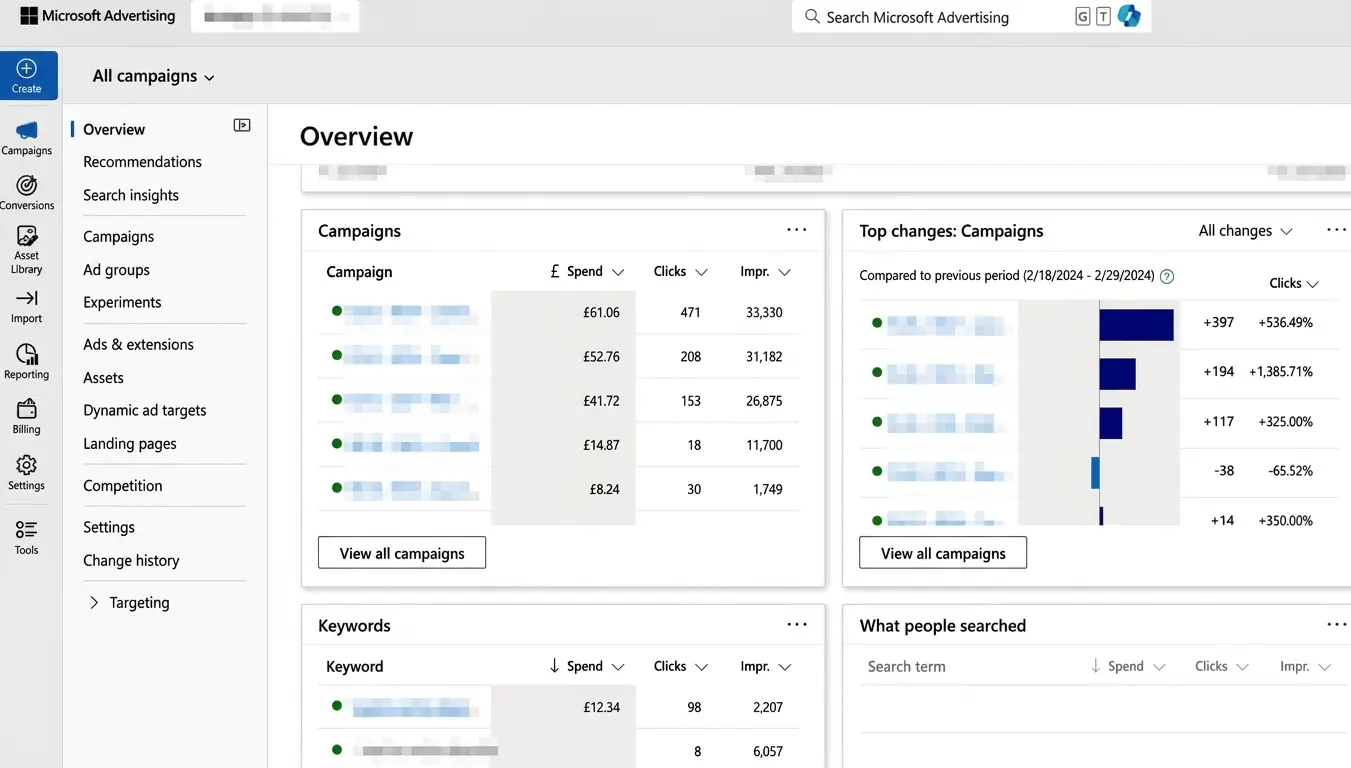
The Results
After 3 months
- 20,000 new active users acquired through Microsoft Ads
- CPC running 30%+ lower than the previous Google Ads spend
- Brand search campaign hitting the strongest ROAS in the account
- LinkedIn targeted campaigns delivering qualified IT decision maker leads at meaningfully lower CAC than Google had been producing
- Conversion tracking was clean and reliable
After 6 months
- 300% ROAS across the full Microsoft Ads mix
- 15% lower customer acquisition cost vs the previous Google Ads spend
- Reduced reliance on Google Ads for new user acquisition
- A working Microsoft Ads system anchored on LinkedIn profile targeting, with brand and solution keyword campaigns layered around it
- REVIEWS
Words from people I've worked with.
Influencing people through my work, performance and dedication. Leaving a positive mark.
I had the pleasure of working with Zunair when we were initiating our marketing endeavors. From the onset, he showcased not only his profound understanding of the marketing landscape but also a unique ability to quickly grasp the nuances of our B2B campaigns. Thanks to his expertise, our PPC campaigns yielded impressive results that significantly enhanced our brand’s visibility and reach. I wholeheartedly recommend Zunair for any company seeking top-tier marketing strategies and execution.

Ahsan Salal
CEO Resourceinn
We use Google Ads to support priority campaigns to drive traffic to certain areas. Zunair offered us the potential to reach new users, retarget existing ones, and drive sales that we otherwise could have missed out on. He actively managed the Google Ads platform to provide campaign management services. Pleasure working with him!💯
Wissam S. Karmouchy
CEO Gold Mark
Zunair is a great resource when it comes to SEO, Google Ads, PPC. I am very impressed with how he deals with the clients and works accordingly. He knows well how marketing works and has never failed to deliver on time. Wishing him good luck on his future endeavours.

Arsalan Rashid
Managing Director ZAM
Zunair was a great asset to our marketing team at Resourceinn. He has started his own business; my prayers and wishes are with him.

Nouman Hassan
Co-founder Resourceinn
Zunair quickly identified the issues with our campaigns and helped improve their performance. He also shared practical and valuable marketing ideas for our new product. Thank you for your support, Zunair.

Jessica White
Marketing Director Baked
Working with Zunair Maqbool has been a game-changer for me. From the start, he just got it, my vision, my goals, everything. What really impressed me was how quickly he turned ideas into action, driving real results faster than I expected.
He’s not just a marketing guy he genuinely cares about the success of the people he works with. I’m genuinely excited about what we’re building together, and having Zunair by my side makes all the difference.
Highly recommended. If you are serious about growth, Zunair Maqbool is the expert you need in your corner.
Sir Peter Magana
Founder D-billionaire Club
Zunair Maqbool didn’t just meet our expectations, he blew them away. We got 60-plus people rushing to our inbox, almost more than 50% of them eager to rent. His strategy was a game-changer for our business.

Mohammed Abdi
CEO Nation Executive
Honoured to work with Zunair, we went from barely being found to ranking for tons of keywords, and our website traffic has skyrocketed. He is incredible. He really knows his stuff and works tirelessly to get us results. If you want value for money, he is the one to call.

Dr. Farukh Bashir
Founder Diabetes TeleCare
- INTRO CALL
Let us talk
If you want to see whether I can help, book a 30-minute call. We’ll look at your account and issues and see what’s happening.
Google & Meta Certified.